Introduction
In any emergency situation, access to timely and accurate information can make a critical difference in safety and survival. Whether it is a natural disaster, power outage, or large-scale infrastructure failure, communication systems are often among the first services to be disrupted.
This is where emergency radios play a vital role. These devices are designed to keep individuals and families informed when traditional communication methods such as mobile networks, internet services, and television are unavailable.
The Role of Information in Emergencies
During disasters, uncertainty and lack of information can increase panic and lead to poor decision-making. Emergency radios help reduce this risk by providing real-time updates from reliable sources. The role of emergency radios is described below.
1. Weather alerts and disaster warnings:
Emergency radios often receive broadcasts from national weather services, offering critical updates on storms, floods, earthquakes, and other hazards.
2. Government and safety instructions:
Authorities use radio broadcasts to communicate evacuation orders, shelter locations, and safety guidelines during emergencies.
3. Continuous updates during outages:
Unlike mobile phones or internet services, emergency radios can function independently of local infrastructure, ensuring uninterrupted access to information.
Access to accurate information allows individuals to make informed decisions, such as when to evacuate, where to seek shelter, or how to conserve resources.
Key Features of Emergency Radios
Modern emergency radios are designed to function in challenging conditions and often include multiple power and communication options.
1. Multiple power sources:
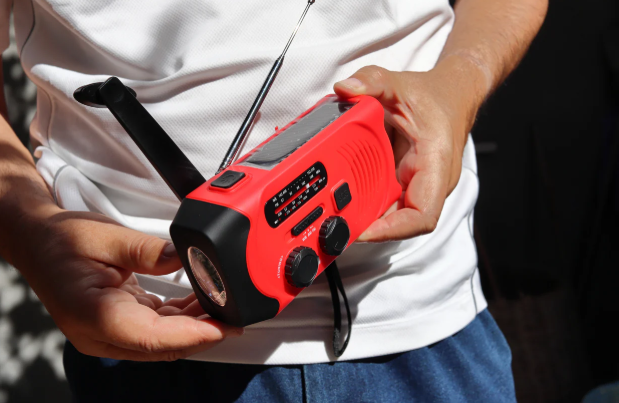
Many emergency radios can be powered by hand cranks, solar panels, or rechargeable batteries, ensuring they remain functional even during extended power outages.
2. NOAA weather band access:
Devices with NOAA weather band access provide direct access to official weather alerts and emergency broadcasts.
3. Portable and durable design:
Emergency radios are typically compact, lightweight, and built to withstand harsh environments, making them suitable for both home and outdoor use.
4. Built-in flashlight and charging ports:
Many models include additional survival features such as LED flashlights and USB ports for charging mobile devices.
Why Emergency Radios Are Critical in Survival Planning
Emergency radios are not just convenience tools; they are essential components of a comprehensive survival strategy.
1. Maintaining communication when networks fail:
When cell towers are down or overloaded, radios remain one of the most reliable communication channels.
2. Supporting informed decision-making:
Real-time updates help individuals avoid dangerous areas, locate safe zones, and understand evolving emergency conditions.
3. Enhancing family preparedness:
Families can stay connected to official information sources, reducing confusion and improving coordination during emergencies.
4. Long-term reliability:
Unlike smart phones, which depend on charged batteries and network availability, emergency radios are designed for extended independent operation.
Real-World Situations Where Emergency Radios Matter
Emergency radios prove invaluable in a wide range of scenarios, including:
- Hurricanes, tornadoes, and severe storms
- Earthquakes and aftershocks
- Floods and landslides
- Extended blackouts or power grid failures
- Remote travel or outdoor survival situations
In each of these cases, access to radio communication can provide lifesaving guidance and situation awareness.
Conclusion
Emergency radios are a fundamental part of any survival plan because they ensure continuous access to critical information when other communication systems fail. As disasters become more unpredictable, having a reliable emergency radio is not just recommended—it is essential for modern preparedness.